
I once stood in a showroom in Paris staring at six different sink samples wondering what the best kitchen sink material was and why that decision was so hard. If that has been you at any store or website, you’re not alone. We went through the exact same thing during our own kitchen remodel. I decided to research each type thoroughly, so you don’t have to.
The main conclusion I found is that there isn’t one single best material, just the right one for your style, budget and how hard you’re going to use it.
Here’s what we learned, material by material, so you can make an informed decision instead of guessing.
Stainless Steel Sinks: The Popular Choice for a Reason
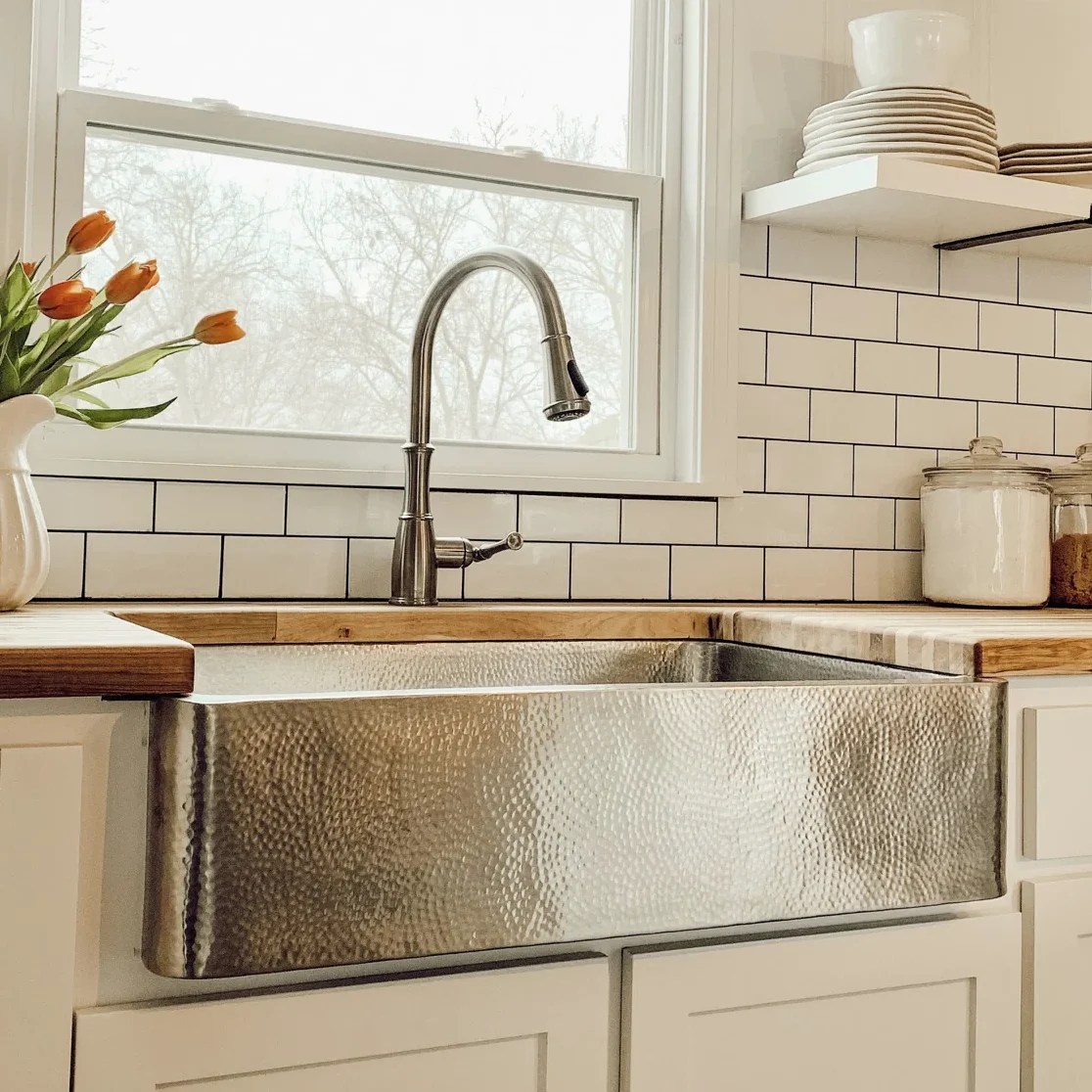


Stainless steel is the material you’ll see most often in modern kitchens, and it’s the popular choice for good reason. Many might consider it a low-design option, which can be true, but in our kitchen we leaned towards decoration in other areas and took a stainless steel sink because, honestly, we couldn’t be bothered.
It handles heavy pots, hot pans straight off the stove, and daily use without a problem. We’ve dropped a cast iron skillet into ours more times than we’d like to admit, and it’s never so much as dented.
The trade-off is water spots. If you have hard water, you’ll notice them, especially on a darker or brushed finish. A quick wipe with a microfiber cloth after washing dishes keeps that sleek appearance intact, but it does mean an extra step if you’re particular about shine. Most stainless models come as drop-in sinks or undermount, so they pair easily with almost any countertop materials, including granite countertops or natural stone countertops.
Check out our Best Kitchen Countertop Decor Ideas for Summer and 25 Black Granite Countertop Ideas to Style Your Kitchen (our favorite picks!)
We think this is BEST for: busy kitchens, busy households, anyone who wants a low-drama sink that won’t be the reason for a future kitchen remodel.
Fireclay Sinks: The One That Looks Expensive Because It Kind Of Is


Fireclay has that classic farmhouse look that we love (thick, glossy, usually white) and it’s one of the most durable materials you can put into a kitchen design. It’s fired at extremely high temperatures, which gives it a non-porous surface that resists staining far better than people expect from something that looks so delicate.
We installed one in a friend’s kitchen renovation last year, and the thing that surprised both of us was the weight. Fireclay sinks are heavy, which means proper installation matters. You need cabinetry and professional installation that can actually support it. Skip this step and you’ll regret it.
That timeless look comes at a higher price range, and chips can happen if something heavy hits it at just the wrong angle. But for farmhouse-style kitchens, nothing else gives you the same seamless look or elegant look at once.
We think this is the BEST for: farmhouse-style kitchens, anyone prioritizing a classic look over budget and homes that tend to be more gentle in the kitchen.
Granite Composite Sinks: The Quiet, Practical Workhorse


Granite composite (sometimes labeled quartz composite sinks, depending on the resin-to-stone ratio) is a mix of crushed natural stone and acrylic resins, molded into a sink that’s extremely stain resistant and handles extreme heat better than you’d think for something that isn’t solid metal.
This is what we ended up choosing for my mother-in-laws kitchen, and two years in, it still looks the way it did the day we installed it. It comes in a genuinely useful variety of colors beyond the usual black or grey, which mattered to us since we didn’t want another all-white kitchen. We chose a beige tone (just as in the picture) and it looks great in a white kitchen.
Sharp objects can occasionally leave marks if you’re chopping directly in the basin, which we don’t recommend on any sink material, honestly. But for daily use in a real household with real mess, it’s held up better than we expected, and the stain resistance has genuinely surprised us.
Best for: modern kitchens, people who want color options and a modern look, households that use their sink hard every single day.
Porcelain Sinks: Delicate Looks, More Care Required

Porcelain sinks are often confused with fireclay because they can look nearly identical, as they both come in that classic bright white, but they’re a different material underneath. Porcelain (sometimes marketed as ceramic kitchen sinks) is typically thinner and fired at lower temperatures than fireclay, which makes it more affordable but also more prone to chipping and scratching over years of use.
If you love the ceramic look but have a busy household with heavy pots and pans in constant rotation, this is worth thinking through carefully. Porcelain does best in lighter-use kitchens or as a secondary prep sink rather than the main workhorse next to the garbage disposal.
Proper care (mild soap, no abrasive scrubbers, no dropping cast-iron pans into it) will extend its life considerably, but it will never be as forgiving as fireclay or granite composite.
Best for: lighter-use kitchens, secondary sinks, anyone who wants the ceramic look on a smaller price range.
Copper Sinks: The Statement Piece (and a Personal Favorite)


Copper is the material people either love immediately or don’t get at all. I ADORE this type of sink (it just didn’t fit in my Japandi style kitchen). My dream, one day, is to have a funky green-toned kitchen with a gorgeous copper sink.
It has natural antimicrobial properties, which is a genuinely nice bonus, and it develops a patina over time that either reads as “rich and lived-in” or “why does my sink look different than it did last year,” depending on your taste.
If you want that patina, embrace it and skip the polishing. If you want it to stay bright and coppery, that’s regular maintenance (a specific cleaner, drying it after each use, the whole routine). It’s not an easy-maintenance material, but it is a beautiful one, and it adds a real touch of elegance to a kitchen that leans warm, traditional, or eclectic.
If your kitchen tones leave room for this creative piece of furniture, I say GO FOR IT!
This is the BEST kitchen sink material for: kitchens where the sink is meant to be a design feature, not just a fixture.
Enameled Cast Iron: The Classic That Refuses to Go Out of Style

Cast-iron sinks with a porcelain enamel coating have been around for decades, and they’re still a top choice for anyone who wants a classic look with real substance. The enamel gives you that smooth surface and elegant look, and the cast iron underneath means it’s not going anywhere! These sinks are built to outlast most kitchens they’re installed in.
The enamel coating is the part to watch. It resists most daily wear well, but a heavy pot dropped at the wrong angle can chip it, and once that happens, it’s visible in a way that stainless steel or composite scratches usually aren’t. Mild soap and gentle cleaning tools are non-negotiable — anything abrasive will dull the finish faster than it should.
The Best kitchen material for: classic or vintage-inspired kitchens, people who want a sink with real weight and history to it.
Solid Surface and Acrylic Sinks: The Budget-Friendly Middle Ground

Solid surface sinks (often the same material as countertops like Corian) and acrylic sinks are lighter on both weight and price. They’re easy to clean, come in a wide variety of shapes, and are a genuinely excellent choice if you’re renovating on a budget or want your sink to seamlessly match a solid-surface countertop for a fully integrated look.
The trade-off is durability under extreme heat (a pan straight off the stove can cause damage that stainless steel or granite composite would shrug off). If you’re someone who sets hot cookware directly in the sink out of habit, this might be the wrong sink for your kitchen.
We think this is BEST for: budget renovations, integrated countertop-and-sink looks, lighter-use kitchens.
So, Which Material Is Right for You?
Here’s the honest answer: the best kitchen sink material is the one that matches your specific needs, not necessarily the one that looks best under showroom lighting. Of the most popular kitchen sink materials, each one earns its spot for a different kind of household:
- Want low-maintenance durability? Stainless steel or granite composite are the most popular material choices for a reason.
- Renovating a farmhouse-style kitchen? Fireclay, if your cabinetry can support the weight.
- Love the ceramic look on a smaller budget? Porcelain, ideally in a lighter-use kitchen.
- Want a design statement? Copper, with eyes open about the upkeep.
- Love a classic, weighty feel? Enameled cast iron.
- Working with a tighter price range or matching a solid-surface counter? Solid surface or acrylic.
Whichever direction you go, the best kitchen sink material comes down to three questions: how hard will you actually use it, what’s your realistic maintenance tolerance, and does it fit the kitchen design you’re building around it. Answer those honestly, and the “best” one becomes pretty obvious.
Leave a Reply